Evidence level
Species-specific veterinary and welfare sources
The core husbandry numbers on this page come from species-level veterinary or welfare guidance rather than broad hobby generalizations.
Tier 1 · Most Researched
Source-backed species page
Axolotls are one of the strangest pets on the internet, but the real care story is cool, clean water and a species that can be ruined fast by fish-tank habits that are too warm or too rough.
Evidence level
Species-specific veterinary and welfare sources
The core husbandry numbers on this page come from species-level veterinary or welfare guidance rather than broad hobby generalizations.
Activity
Mostly crepuscular
Activity pattern tells you when the animal is visible, when feeding happens, and whether its routine fits your schedule.
Lifespan
10–15 years
Lifespan changes the commitment more than novelty does; some of these animals stay with you for years or even decades.
Category context
This group covers aquatic oddities and moisture-dependent species where water quality, humidity, and temperature control usually decide the outcome.
Species where cool water, filtration, and tank design matter more than looks.
Overview
Axolotls are one of the strangest pets on the internet, but the real care story is cool, clean water and a species that can be ruined fast by fish-tank habits that are too warm or too rough.
The focus here is the care load that matters first in real life: enclosure design, temperature and humidity control, feeding rhythm, and the husbandry mistakes that cause trouble fastest.
Care snapshot
Temperature
University of Kentucky’s axolotl guide emphasizes cool water, with overheating posing a much bigger routine risk than underheating in most homes.
Tank style
Axolotls do best in a species tank with gentle flow, stable water quality, and floor space that does not force constant current or competition.
Substrate
Small gravel is a common avoidable risk because axolotls can swallow it while feeding.
Handling
This is a watch-first aquatic amphibian; routine netting or hand contact adds stress without adding welfare value.
This page leans on species-specific welfare or veterinary owner guidance, so the setup numbers here are stronger than a broad generic exotic-pet summary.
Why it’s weird
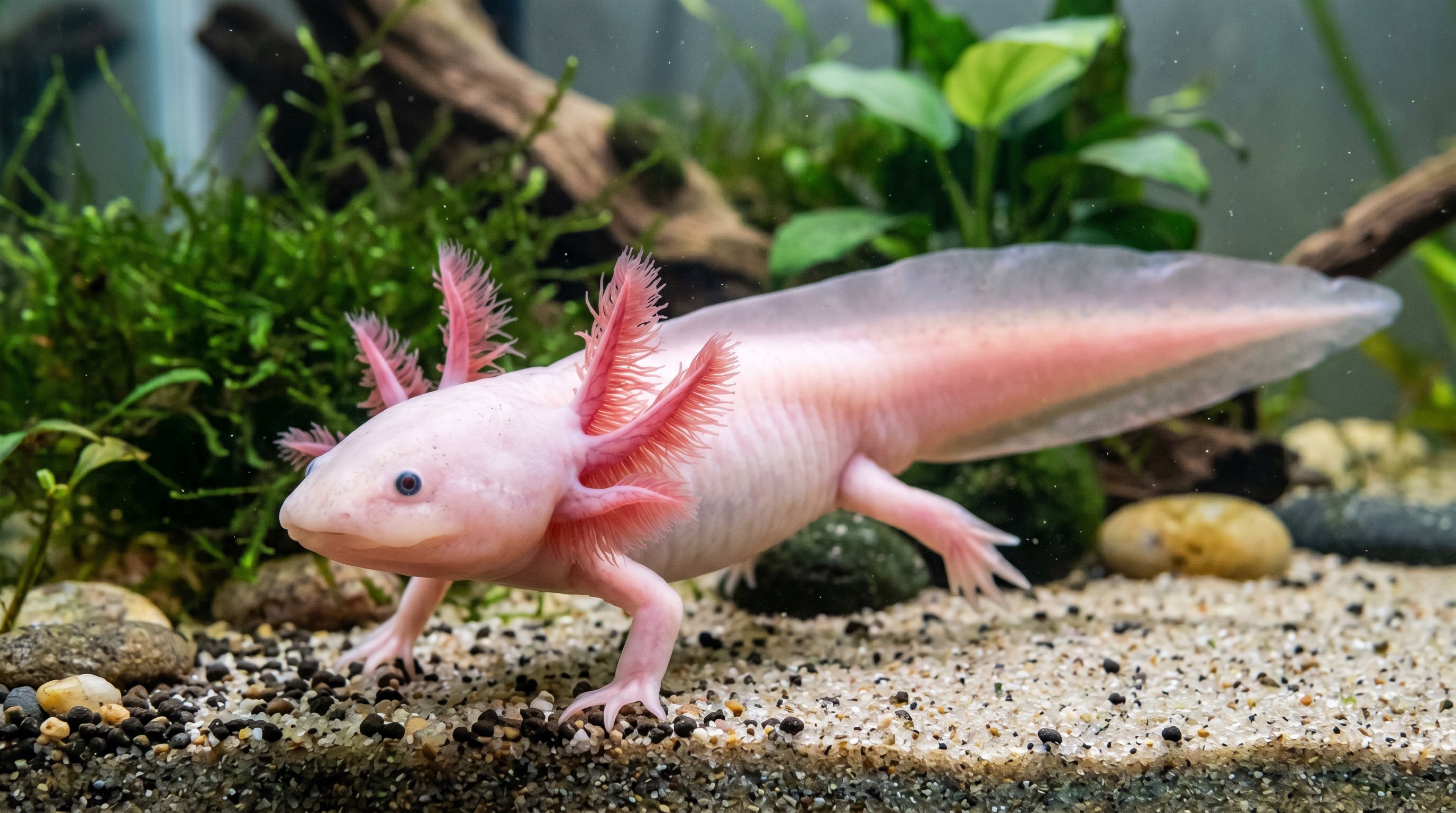
They pull readers in because they look unreal, keep external gills as adults, and seem simpler than many reptiles or mammals at first glance.
Care reality
Most axolotl problems are environmental: warm water, inappropriate tankmates, bad flow, or poor substrate choices matter far more than “personality.”
Setup baseline
Do not buy an axolotl until you know how the tank will stay cool through the warmest part of the year.
The filter should protect water quality without pushing the animal around the tank.
A dedicated tank is simpler and safer than trying to combine axolotls with fish or decorative community plans.
Daily rhythm
Monitor water temperature, appetite, body posture, and obvious stress signals before they snowball.
Partial water changes, parameter checks, and waste removal are the invisible work that keeps them thriving.
Warm-room spikes can become the whole story in summer, so prevention matters more than last-minute hacks.
Myth vs reality
Myth
Axolotls are easy because they just sit there.
Reality
The hard part is invisible water stability, not whether the animal looks active and dramatic.
Myth
Any normal aquarium filter will do.
Reality
Strong current stresses them quickly, so filtration has to be both effective and gentle.
Myth
The smiling face means they are always doing fine.
Reality
Real cues are gill condition, skin quality, posture, appetite, and water parameters.
Fit check
Best for people who already respect aquarium maintenance, can keep temperatures consistently cool, and are willing to build a species tank instead of a mixed novelty setup.
Great fit if…
Probably not if…
Watchouts
Warm rooms, gravel or other swallowable substrate, aggressive filtration, and community-tank assumptions are the main beginner traps.
Common mistakes
Sources & notes
This page leans on species-specific welfare or veterinary owner guidance, so the setup numbers here are stronger than a broad generic exotic-pet summary.
Used for temperature, filtration, water depth, and husbandry basics from a specialist axolotl resource.
Used as a natural-history cross-check on axolotl biology, life stage, and habitat context.
Before you act on this guide
This page is for research, not veterinary diagnosis or legal clearance. Local ownership rules, rescue policies, and exotic-vet access vary by place.
Cookie settings
Required for theme, navigation state, and remembering this choice.
Some changes may need a refresh.