Evidence level
Captive-care sheets plus natural-history sources
This page leans on captive-care references and natural-history context because species-specific veterinary owner literature is still thin.
Tier 3 · More Niche
Source-backed species page
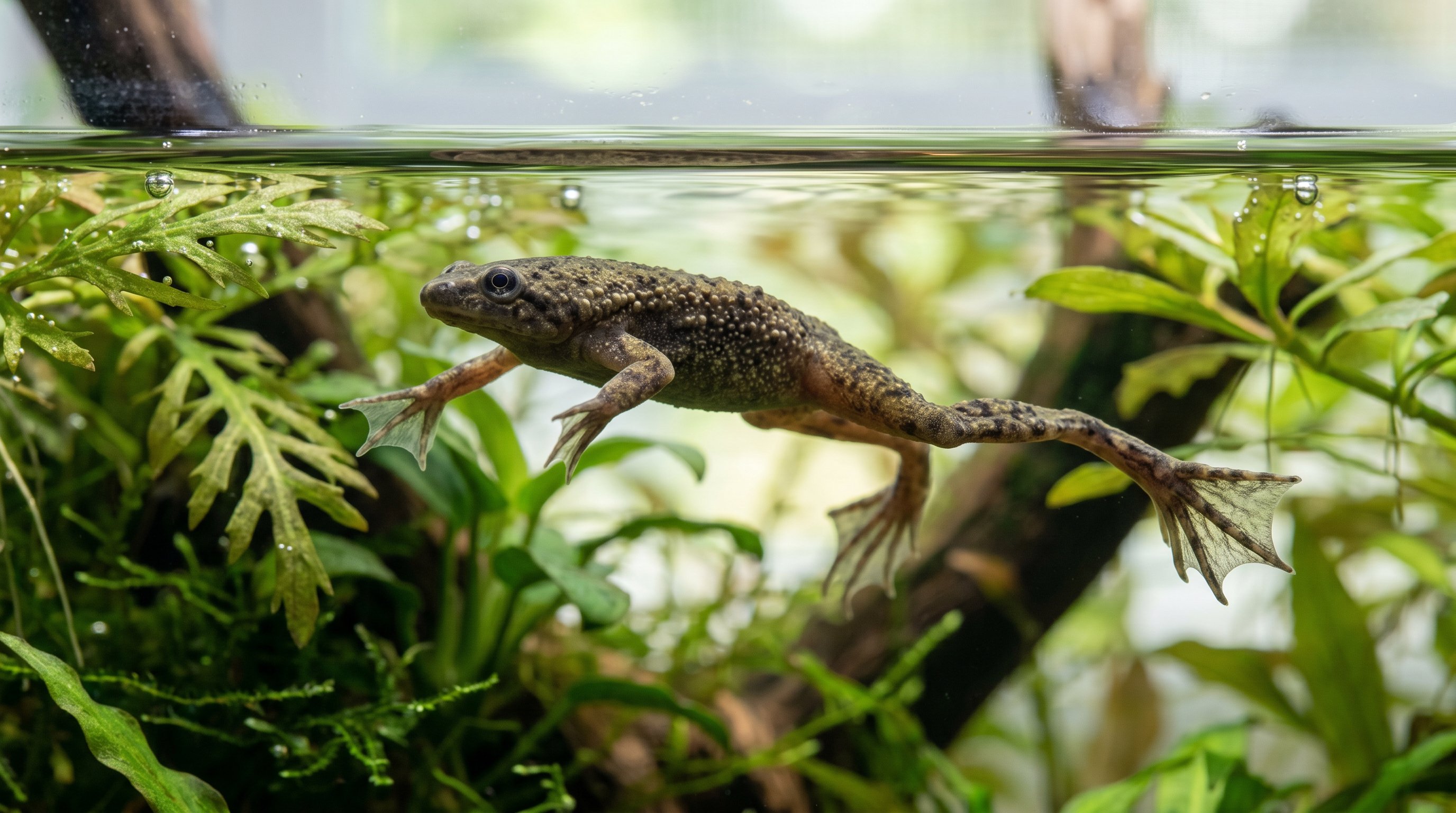
African dwarf frogs look simple because they stay tiny, but the real care difficulty is water quality, food competition, and keeping a fully aquatic frog from being treated like a throw-in tank novelty.
Evidence level
Captive-care sheets plus natural-history sources
This page leans on captive-care references and natural-history context because species-specific veterinary owner literature is still thin.
Activity
Day and evening active bursts
Activity pattern tells you when the animal is visible, when feeding happens, and whether its routine fits your schedule.
Lifespan
5–7 years
Lifespan changes the commitment more than novelty does; some of these animals stay with you for years or even decades.
Category context
This group covers aquatic oddities and moisture-dependent species where water quality, humidity, and temperature control usually decide the outcome.
Species where cool water, filtration, and tank design matter more than looks.
Overview
African dwarf frogs look simple because they stay tiny, but the real care difficulty is water quality, food competition, and keeping a fully aquatic frog from being treated like a throw-in tank novelty.
The focus here is the care load that matters first in real life: enclosure design, temperature and humidity control, feeding rhythm, and the husbandry mistakes that cause trouble fastest.
Care snapshot
Aquatic only
Aquarium Co-Op and Modest Fish both treat African dwarf frogs as fully aquatic animals that need permanent water access and easy routes to the surface for air.
Tank dynamics
Peaceful setup matters because many common community fish outcompete dwarf frogs for food or stress them.
Feeding
These frogs often need deliberate target feeding so they actually find and consume their food before tankmates do.
Water quality
Stable filtration, regular water changes, and low-stress flow matter more than fancy décor.
This page combines captive-care sheets with species natural-history references. For odd invertebrates and niche amphibians, that is often the most honest evidence mix available to hobbyists.
Why it’s weird
They stand out because they are fully aquatic frogs, which already makes them feel strange to many people who only associate frogs with land and glass terrariums.
Care reality
They are not decorations for a noisy community aquarium. They need calm feeding opportunities, safe tankmates if any, and water conditions that stay stable week after week.
Setup baseline
Prioritize safe depth, gentle flow, cover, and easy access to the surface before you think about mixed-species stocking.
Build a routine that lets you watch each frog eat instead of assuming food dropped into the tank will be found.
Small aquatic frogs have very little room for sloppy maintenance, so filtration and water changes are part of core care.
Fit check
Best for people who already accept aquarium maintenance, prefer small aquatic animals over handleable pets, and can spot a frog that is getting outcompeted at feeding time.
Watchouts
Fast fish tankmates, poor water quality, deep aggressive flow, and food that never reaches the frog are the main practical failures.
Common mistakes
Sources & notes
This page combines captive-care sheets with species natural-history references. For odd invertebrates and niche amphibians, that is often the most honest evidence mix available to hobbyists.
Used for fully aquatic housing, surface access, tank setup, and feeding expectations in home aquariums.
Used as a husbandry cross-check for community-tank risks, feeding competition, and maintenance rhythm.
Used as a natural-history cross-check on dwarf frog biology and aquatic behavior.
Before you act on this guide
This page is for research, not veterinary diagnosis or legal clearance. Local ownership rules, rescue policies, and exotic-vet access vary by place.
Cookie settings
Required for theme, navigation state, and remembering this choice.
Some changes may need a refresh.