Evidence level
Captive-care sheets plus natural-history sources
This page leans on captive-care references and natural-history context because species-specific veterinary owner literature is still thin.
Tier 3 · More Niche
Source-backed species page
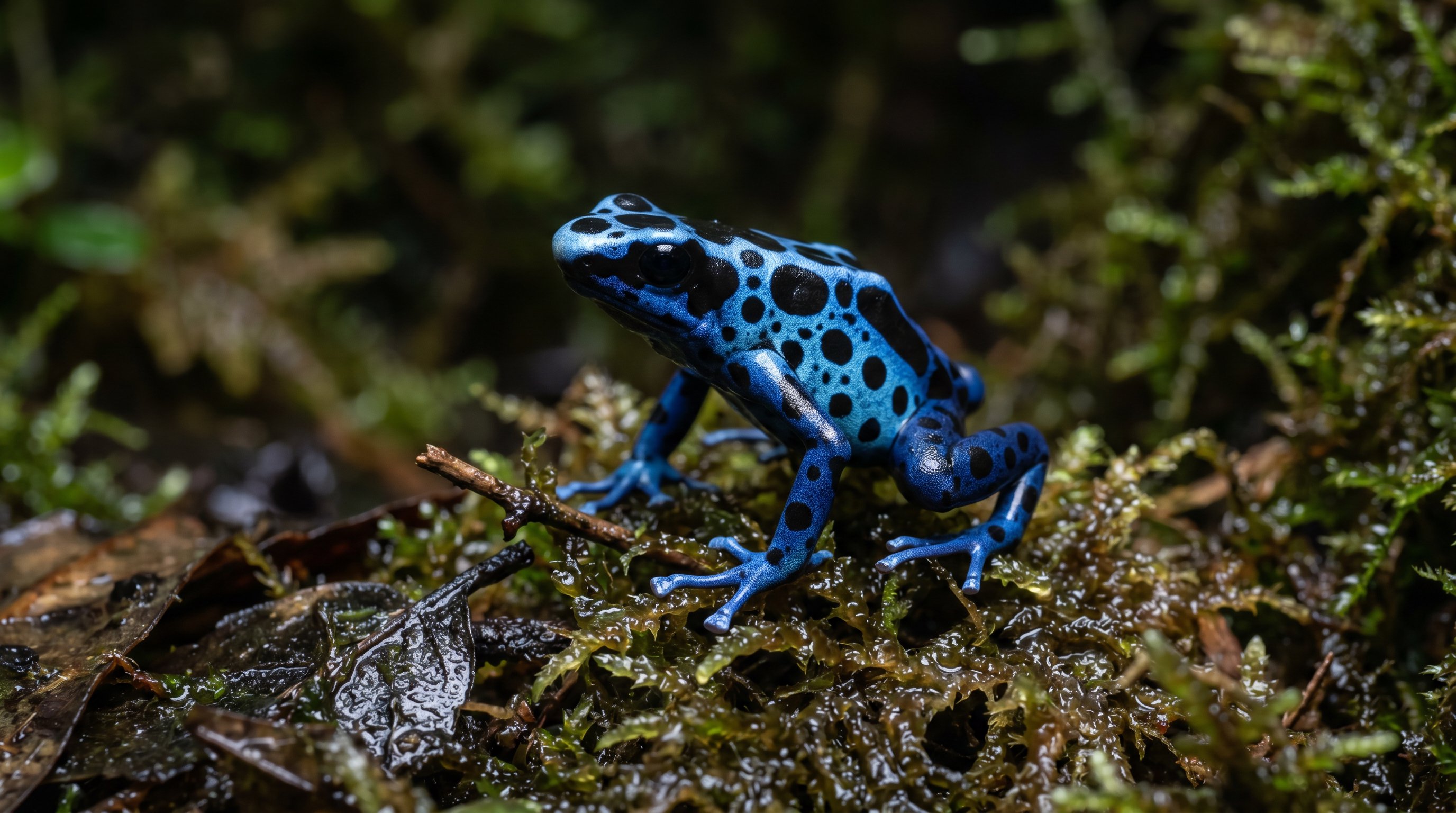
Dart frogs are small but not simple: they are humidity, airflow, and micro-prey animals, not “tiny frogs for a tiny tank.”
Evidence level
Captive-care sheets plus natural-history sources
This page leans on captive-care references and natural-history context because species-specific veterinary owner literature is still thin.
Activity
Diurnal
Activity pattern tells you when the animal is visible, when feeding happens, and whether its routine fits your schedule.
Lifespan
8–15 years
Lifespan changes the commitment more than novelty does; some of these animals stay with you for years or even decades.
Category context
This group covers aquatic oddities and moisture-dependent species where water quality, humidity, and temperature control usually decide the outcome.
Amphibians often mislabeled as easy even though moisture, sanitation, and prey size matter a lot.
Overview
Dart frogs are small but not simple: they are humidity, airflow, and micro-prey animals, not “tiny frogs for a tiny tank.”
The focus here is the care load that matters first in real life: enclosure design, temperature and humidity control, feeding rhythm, and the husbandry mistakes that cause trouble fastest.
Care snapshot
Environment style
Captive dart-frog care consistently centers on planted, high-humidity tropical vivariums with cover, leaf litter, and very stable conditions.
Food scale
Feeding is built around appropriately tiny live prey, not standard cricket routines for larger frogs.
Handling
These are look-first amphibians; repeated handling works against skin health and stress control.
Captive reality
Captive-bred poison dart frogs are kept for color and behavior, but the actual husbandry demand sits in enclosure stability, not in toxicity myths.
This page combines captive-care sheets with species natural-history references. For odd invertebrates and niche amphibians, that is often the most honest evidence mix available to hobbyists.
Why it’s weird
They stand out because their color, scale, and tropical planted-vivarium style make them feel more like living jewels than like ordinary pet frogs.
Care reality
The successful setup is basically a planted humidity system with disciplined feeding of small live prey and almost no direct handling.
Setup baseline
Start with moisture retention, ventilation, and leaf-litter style cover instead of treating the vivarium as a dry display box.
Fruit flies and other tiny feeder routines have to be easy for you before the frogs arrive.
If your main goal is physical interaction, dart frogs are the wrong fit despite the small size.
Fit check
Best for people who enjoy enclosure-building, plant-heavy vivariums, and routine micro-prey care more than hands-on interaction.
Watchouts
Poor ventilation, prey that is too large, inconsistent humidity, and casual handling are what push these frogs from beautiful to fragile.
Common mistakes
Sources & notes
This page combines captive-care sheets with species natural-history references. For odd invertebrates and niche amphibians, that is often the most honest evidence mix available to hobbyists.
Used as a natural-history cross-check on dart frog biology, habitat structure, and feeding ecology.
Used as a specialist cross-check for vivarium structure, humidity, plant cover, and feeder scale.
Before you act on this guide
This page is for research, not veterinary diagnosis or legal clearance. Local ownership rules, rescue policies, and exotic-vet access vary by place.
Cookie settings
Required for theme, navigation state, and remembering this choice.
Some changes may need a refresh.