Evidence level
Captive-care sheets plus natural-history sources
This page leans on captive-care references and natural-history context because species-specific veterinary owner literature is still thin.
Tier 3 · More Niche
Source-backed species page
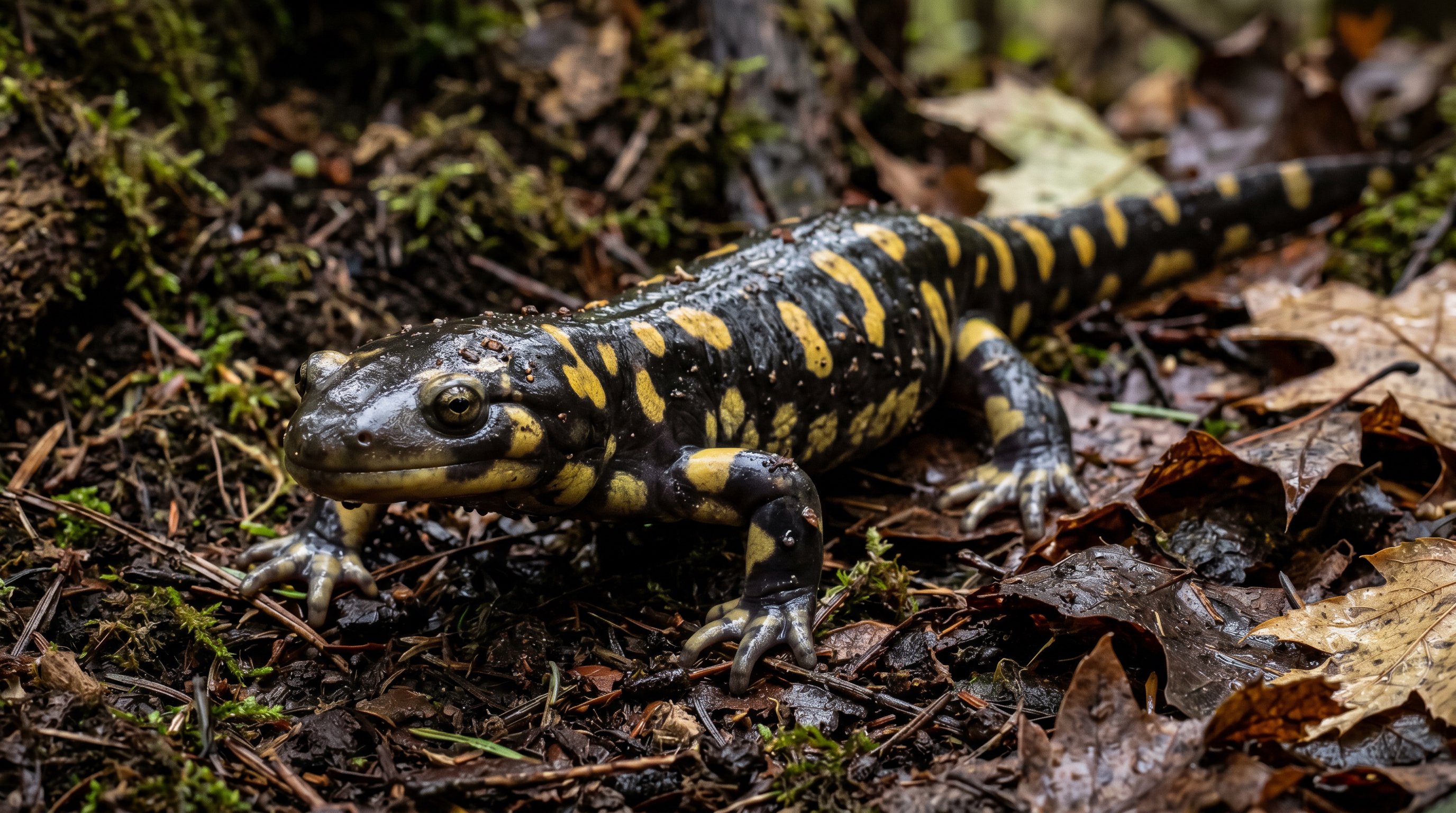
Tiger salamanders are compelling because they look prehistoric and bold, but the real care skill is cool, moist, low-stress terrestrial husbandry.
Evidence level
Captive-care sheets plus natural-history sources
This page leans on captive-care references and natural-history context because species-specific veterinary owner literature is still thin.
Activity
Nocturnal
Activity pattern tells you when the animal is visible, when feeding happens, and whether its routine fits your schedule.
Lifespan
10–15 years
Lifespan changes the commitment more than novelty does; some of these animals stay with you for years or even decades.
Category context
This group covers aquatic oddities and moisture-dependent species where water quality, humidity, and temperature control usually decide the outcome.
Cooler, wetter species that usually leave less room for enclosure mistakes.
Overview
Tiger salamanders are compelling because they look prehistoric and bold, but the real care skill is cool, moist, low-stress terrestrial husbandry.
The focus here is the care load that matters first in real life: enclosure design, temperature and humidity control, feeding rhythm, and the husbandry mistakes that cause trouble fastest.
Care snapshot
Housing style
PetMD describes tiger salamanders as mostly terrestrial captives that need deep, moisture-holding substrate for digging and hiding.
Temperature
They do best on the cool side; overheated rooms are a bigger threat than underpowered basking equipment because they are not basking reptiles.
Water access
They still need clean water access, but the enclosure should not be treated like an aquatic newt tank.
Handling
Salamander skin and stress tolerance make them watch-first animals rather than frequent handling pets.
This page combines captive-care sheets with species natural-history references. For odd invertebrates and niche amphibians, that is often the most honest evidence mix available to hobbyists.
Why it’s weird
They stand out because they look far more ancient and heavy-bodied than the average pet amphibian, which makes people curious whether they are robust or merely look that way.
Care reality
They do not need a flashy setup. They need clean moisture, burrowable substrate, cool temperatures, and almost no unnecessary handling.
Setup baseline
Build around deep damp substrate and shaded retreats instead of bright hot display lighting.
Spoiled food and dirty damp substrate break this kind of enclosure quickly.
The less casual handling you build into the care plan, the more margin you leave for the salamander.
Fit check
Best for people who want a terrestrial amphibian with a stronger natural-history feel and are comfortable building care around substrate quality and temperature restraint.
Watchouts
Overheating, dry substrate, rough handling, and feeding that ignores obesity or impaction risk are the big pitfalls.
Common mistakes
Sources & notes
This page combines captive-care sheets with species natural-history references. For odd invertebrates and niche amphibians, that is often the most honest evidence mix available to hobbyists.
Used for terrestrial housing, cool-temperature emphasis, substrate depth, and handling expectations.
Before you act on this guide
This page is for research, not veterinary diagnosis or legal clearance. Local ownership rules, rescue policies, and exotic-vet access vary by place.
Cookie settings
Required for theme, navigation state, and remembering this choice.
Some changes may need a refresh.