Evidence level
Captive-care sheets plus natural-history sources
This page leans on captive-care references and natural-history context because species-specific veterinary owner literature is still thin.
Tier 3 · More Niche
Source-backed species page
Stick insects look almost maintenance-free, but the actual care load sits in host plants, ventilation, and safe molting height.
Evidence level
Captive-care sheets plus natural-history sources
This page leans on captive-care references and natural-history context because species-specific veterinary owner literature is still thin.
Activity
Mostly nocturnal
Activity pattern tells you when the animal is visible, when feeding happens, and whether its routine fits your schedule.
Lifespan
6–18 months depending on species
Lifespan changes the commitment more than novelty does; some of these animals stay with you for years or even decades.
Category context
The category for spiders, insects, and other exotics where enclosure microclimate, low-disturbance care, and sourcing questions matter more than most buyers expect.
Invertebrates that often look simple until molting, airflow, or food-plant needs are ignored.
Overview
Stick insects look almost maintenance-free, but the actual care load sits in host plants, ventilation, and safe molting height.
The focus here is the care load that matters first in real life: enclosure design, temperature and humidity control, feeding rhythm, and the husbandry mistakes that cause trouble fastest.
Care snapshot
Food is species-specific
Keeping Insects stresses that host plant choice is the first husbandry question because some stick insects are flexible and others are not.
Vertical space
They need enough height to hang and molt without hitting décor or substrate too early.
Ventilation + humidity
Most setups need humidity support without stale, sealed air, so cross-ventilation matters.
Handling
Their camouflage body plan is delicate; careful handling is safer than treating them like robust feeder insects.
This page combines captive-care sheets with species natural-history references. For odd invertebrates and niche amphibians, that is often the most honest evidence mix available to hobbyists.
Why it’s weird
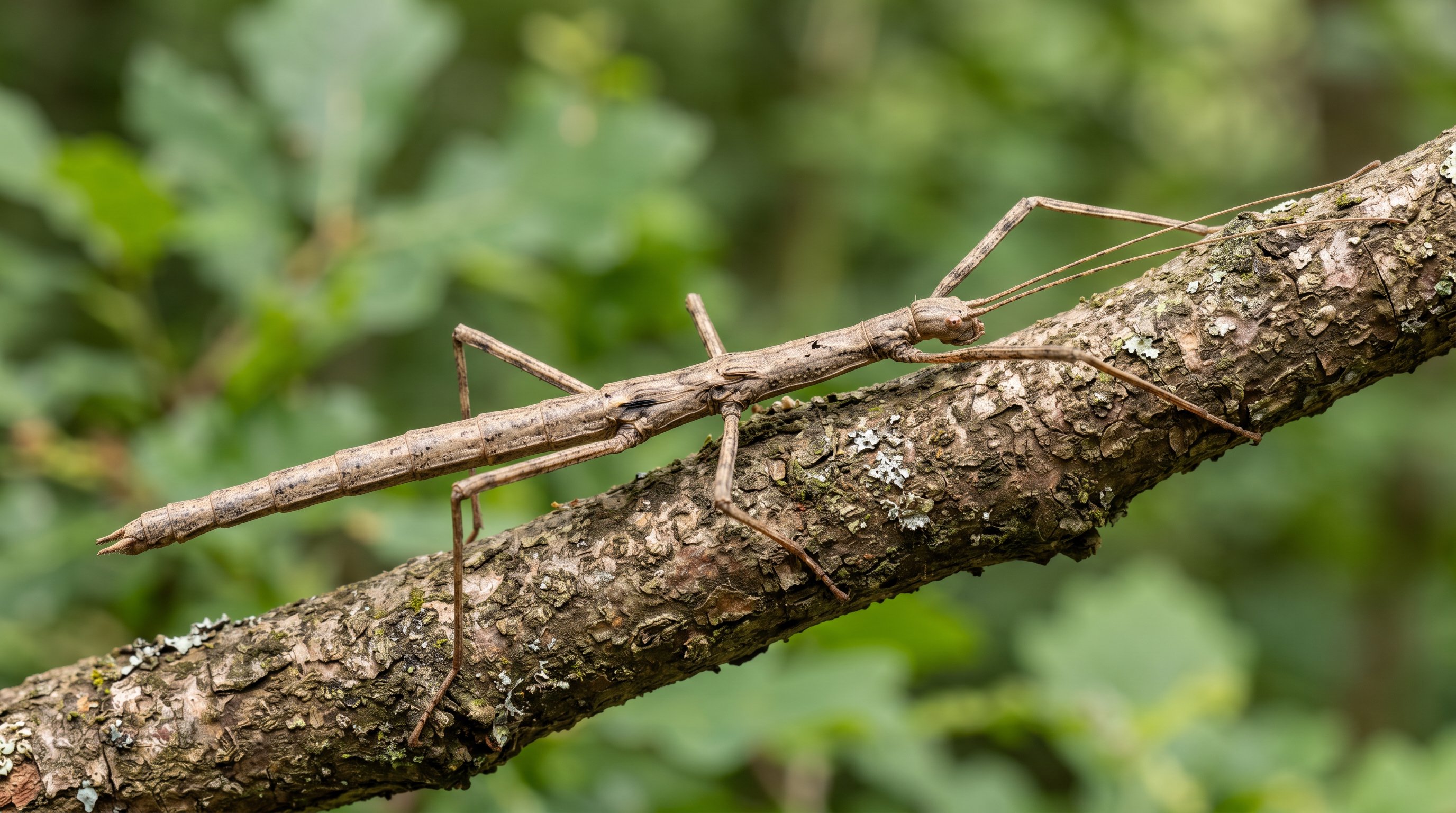
They stand out because their camouflage is so extreme that the animal barely registers as an animal at first glance, which makes the captive-care question instantly intriguing.
Care reality
They are easy only if you can reliably provide the right leaves and enough uncluttered vertical space for molting.
Setup baseline
Make sure you can source the right leaves or browse consistently through the year.
Molting needs open vertical clearance more than a crowded decorative background.
A lightly humid enclosure with good ventilation is safer than a sealed wet box.
Fit check
Best for people who want a very low-disturbance display insect and can maintain a steady supply of suitable browse or food plants.
Watchouts
Wrong food plant, poor airflow, and not enough height to molt cleanly are the classic failures.
Common mistakes
Sources & notes
This page combines captive-care sheets with species natural-history references. For odd invertebrates and niche amphibians, that is often the most honest evidence mix available to hobbyists.
Used for host-plant dependence, enclosure height, humidity, and molting considerations.
Used as a natural-history cross-check on body form and behavior.
Before you act on this guide
This page is for research, not veterinary diagnosis or legal clearance. Local ownership rules, rescue policies, and exotic-vet access vary by place.
Cookie settings
Required for theme, navigation state, and remembering this choice.
Some changes may need a refresh.