Evidence level
Captive-care sheets plus natural-history sources
This page leans on captive-care references and natural-history context because species-specific veterinary owner literature is still thin.
Tier 3 · More Niche
Source-backed species page
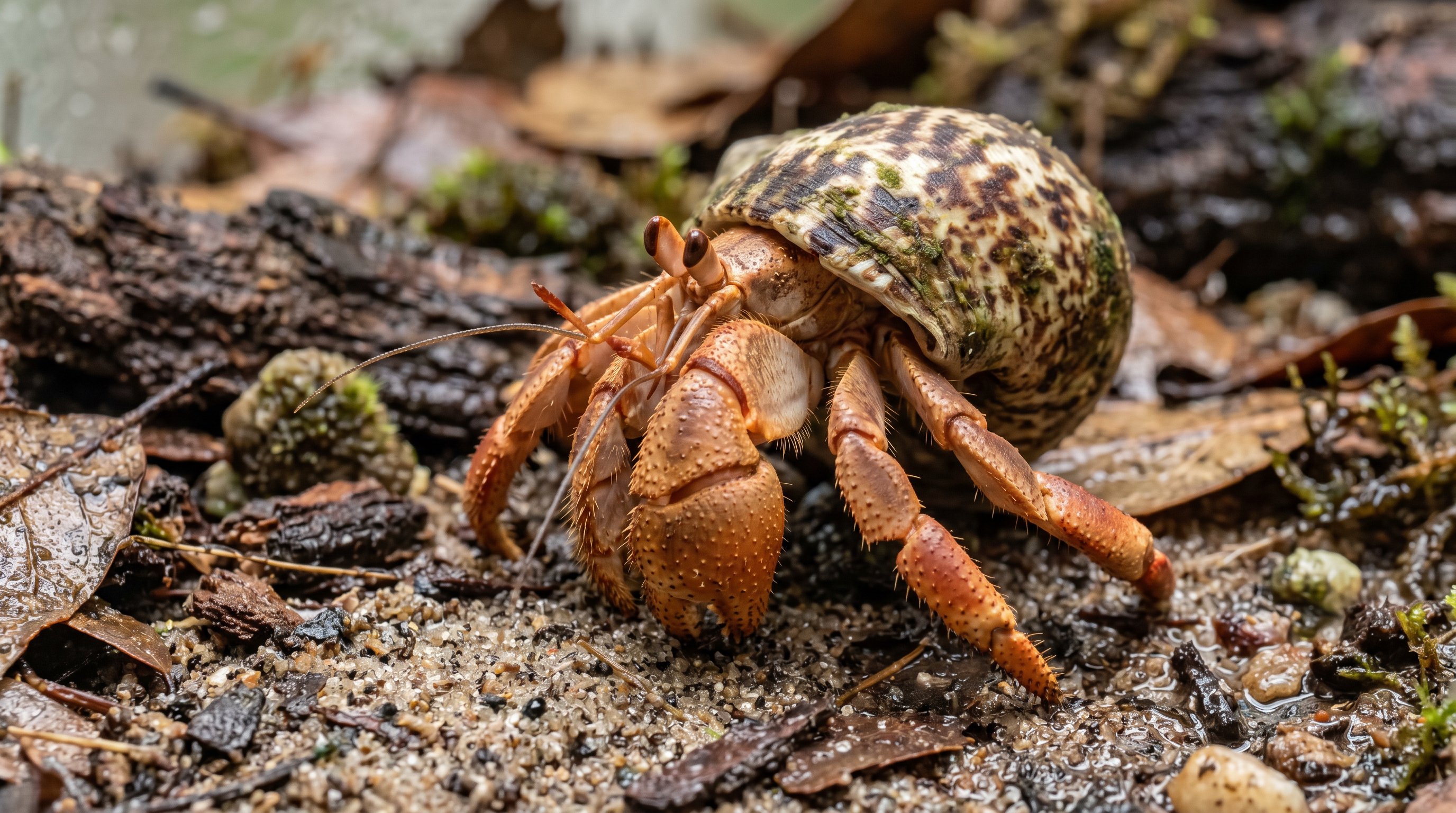
Hermit crabs are among the most misunderstood small exotics because the real care model is humid social crustacean colony, not painted-shell souvenir pet.
Evidence level
Captive-care sheets plus natural-history sources
This page leans on captive-care references and natural-history context because species-specific veterinary owner literature is still thin.
Activity
Nocturnal
Activity pattern tells you when the animal is visible, when feeding happens, and whether its routine fits your schedule.
Lifespan
10–20+ years with good care
Lifespan changes the commitment more than novelty does; some of these animals stay with you for years or even decades.
Category context
The category for spiders, insects, and other exotics where enclosure microclimate, low-disturbance care, and sourcing questions matter more than most buyers expect.
Crabs, millipedes, and odd arachnids where moisture control, molting safety, and low-disturbance care matter most.
Overview
Hermit crabs are among the most misunderstood small exotics because the real care model is humid social crustacean colony, not painted-shell souvenir pet.
The focus here is the care load that matters first in real life: enclosure design, temperature and humidity control, feeding rhythm, and the husbandry mistakes that cause trouble fastest.
Care snapshot
Social species
PetMD and Hermit Crab Association both describe hermit crabs as social animals that are better kept with company than alone.
Humidity + substrate
Successful captive care depends on humid air and substrate deep enough for burying and molting, not on a dry decorative beach tank.
Shell availability
Multiple spare shells in appropriate sizes are a core husbandry requirement, not an accessory.
Water types
Keepers usually need both fresh and marine-grade saltwater options because hermit crabs use both in routine life.
This page combines captive-care sheets with species natural-history references. For odd invertebrates and niche amphibians, that is often the most honest evidence mix available to hobbyists.
Why it’s weird
They stand out because many people know them only as disposable beach-shop pets, so discovering their real lifespan and colony needs changes the whole picture.
Care reality
Most bad hermit-crab care comes from land-crab myths: not enough humidity, not enough substrate to dig, wrong shells, and no saltwater option.
Setup baseline
Deep substrate and quiet colony conditions matter because a disturbed molt can become a welfare emergency.
Offer multiple natural shells in the right openings so shell choice does not become a chronic stressor.
Hermit crabs are land crabs, but dry room air is still one of the fastest ways to fail them.
Fit check
Best for people who enjoy habitat-building, can manage humidity and shell options, and are willing to keep a social group rather than a single novelty crab.
Watchouts
Dry air, shallow substrate, poor shell selection, and solitary housing are the first things to fix.
Common mistakes
Sources & notes
This page combines captive-care sheets with species natural-history references. For odd invertebrates and niche amphibians, that is often the most honest evidence mix available to hobbyists.
Used for social housing, humidity, substrate depth, shell needs, and basic husbandry.
Used as a captive-care cross-check for substrate depth, shell choice, humidity, and fresh/saltwater provision.
Used as a natural-history cross-check for behavior and shell use.
Before you act on this guide
This page is for research, not veterinary diagnosis or legal clearance. Local ownership rules, rescue policies, and exotic-vet access vary by place.
Cookie settings
Required for theme, navigation state, and remembering this choice.
Some changes may need a refresh.