Evidence level
Species-specific veterinary and welfare sources
The core husbandry numbers on this page come from species-level veterinary or welfare guidance rather than broad hobby generalizations.
Tier 1 · Most Researched
Source-backed species page
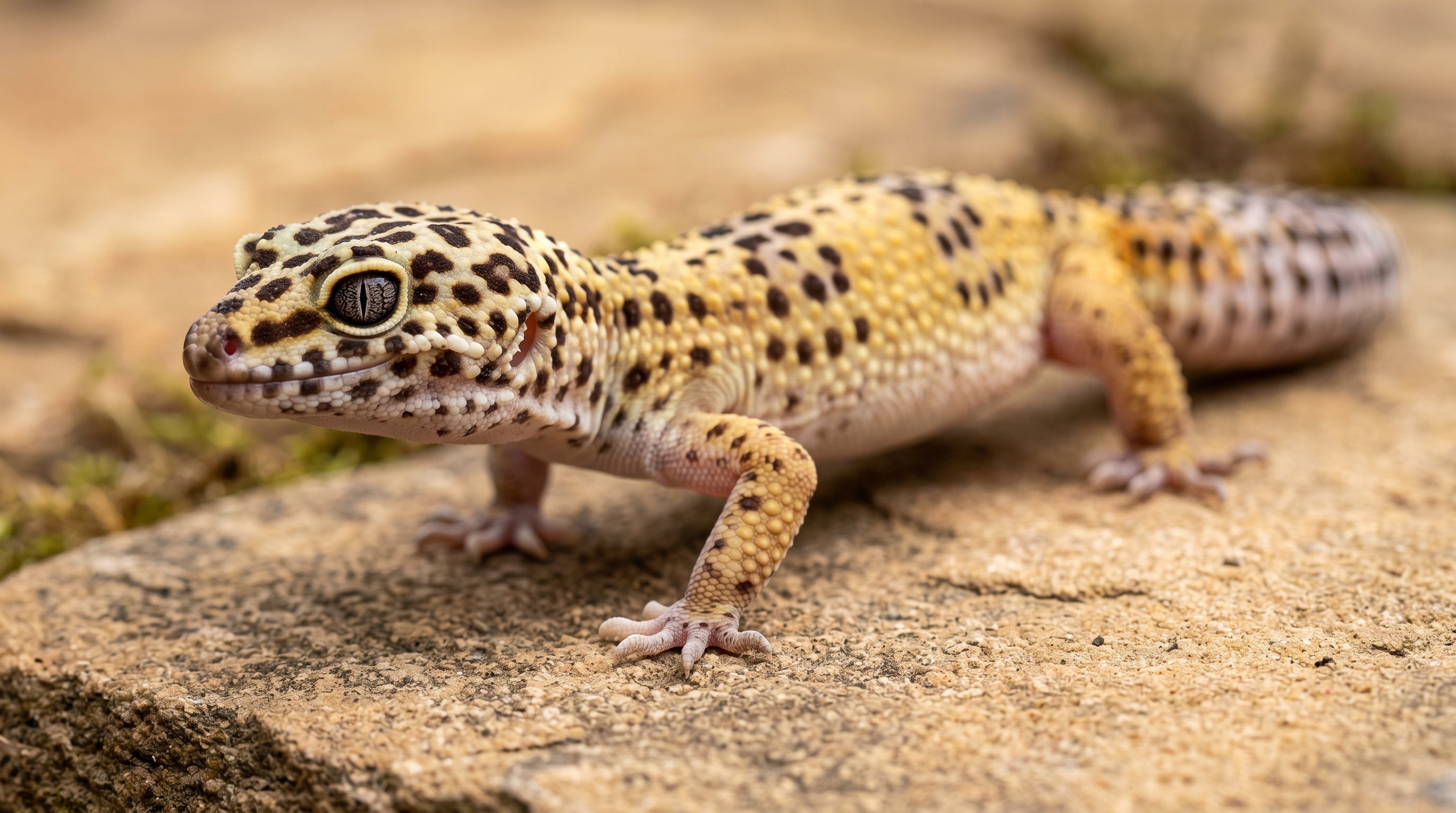
Leopard geckos stay one of the cleanest first-reptile choices, but “easy” still depends on dry heat, a humid hide, and a disciplined supplement routine.
Evidence level
Species-specific veterinary and welfare sources
The core husbandry numbers on this page come from species-level veterinary or welfare guidance rather than broad hobby generalizations.
Activity
Crepuscular
Activity pattern tells you when the animal is visible, when feeding happens, and whether its routine fits your schedule.
Lifespan
15–20 years
Lifespan changes the commitment more than novelty does; some of these animals stay with you for years or even decades.
Category context
A practical starting group with familiar species, strong husbandry demand, and lots of real-world questions about setup, feeding, and lifespan.
Compact reptiles that look approachable but differ sharply in humidity, diet, and lighting needs.
Overview
Leopard geckos stay one of the cleanest first-reptile choices, but “easy” still depends on dry heat, a humid hide, and a disciplined supplement routine.
The focus here is the care load that matters first in real life: enclosure design, temperature and humidity control, feeding rhythm, and the husbandry mistakes that cause trouble fastest.
Care snapshot
Enclosure baseline
RSPCA recommends a minimum adult enclosure of about 60 × 40 × 30 cm, though larger is better if the gecko still feels secure.
Heat + humidity
Target a basking zone around 28–30°C, a cooler end around 24–26°C, and general humidity around 30–40% with a separate humid hide.
Lighting
RSPCA recommends a 2–5% UVB tube and a UV gradient around UVI 0.7 in the basking zone down to shade.
Diet
Captive leopard geckos need a varied live-invertebrate diet, fresh water at all times, and consistent supplementation rather than a single feeder forever.
This page leans on species-specific welfare or veterinary owner guidance, so the setup numbers here are stronger than a broad generic exotic-pet summary.
Why it’s weird
They stand out because they make reptile keeping feel accessible without looking ordinary, especially for people who want a small nocturnal lizard rather than a large show animal.
Care reality
The setup is small only compared with larger reptiles. You still need a measured thermal gradient, a local humid retreat, and a varied live-food plan.
Setup baseline
Keep the enclosure broadly dry, then add a true humid hide so sheds do not depend on guessing or random spraying.
Build a guarded basking area with stone or slate that holds warmth where the gecko actually rests.
Plan for multiple live feeders with supplementation instead of treating mealworms alone as a complete long-term diet.
Daily rhythm
Many leopard geckos become more active around dusk and after dark, so a gecko that spends much of the day hidden is often behaving normally.
Checking moisture in the hide, replacing soiled substrate, and watching for stuck shed are some of the most useful small maintenance tasks.
A gecko can keep eating while the enclosure is underheated or the supplement routine is weak, which is why observation has to go beyond appetite.
Myth vs reality
Myth
A leopard gecko only needs a warm tank and a bowl of mealworms.
Reality
Long-term success depends on thermal gradient, humid shedding support, feeder variety, and supplementation rather than one simple food routine.
Myth
If the tail looks thick, everything else must be fine.
Reality
Tail reserves are useful, but they do not replace proper temperatures, humid-hide maintenance, or balanced nutrition.
Myth
Because the species comes from drier habitats, humidity barely matters.
Reality
Whole-enclosure humidity can stay moderate, but the humid hide still matters directly for clean sheds and skin health.
Fit check
Best for people who want a smaller terrestrial lizard, do not mind feeder insects, and prefer an animal that is most active around dawn and dusk rather than all day.
Great fit if…
Probably not if…
Watchouts
Missing humid hides, underheating, loose prey left in the tank, and calcium mistakes create most of the avoidable trouble.
Common mistakes
Sources & notes
This page leans on species-specific welfare or veterinary owner guidance, so the setup numbers here are stronger than a broad generic exotic-pet summary.
Used for minimum enclosure size, temperature and humidity targets, UVB, water, and feeder guidance.
Used as a veterinary cross-check for desert and semi-arid lizard husbandry patterns.
Before you act on this guide
This page is for research, not veterinary diagnosis or legal clearance. Local ownership rules, rescue policies, and exotic-vet access vary by place.
Cookie settings
Required for theme, navigation state, and remembering this choice.
Some changes may need a refresh.