Evidence level
Species-specific veterinary and welfare sources
The core husbandry numbers on this page come from species-level veterinary or welfare guidance rather than broad hobby generalizations.
Tier 1 · Most Researched
Source-backed species page
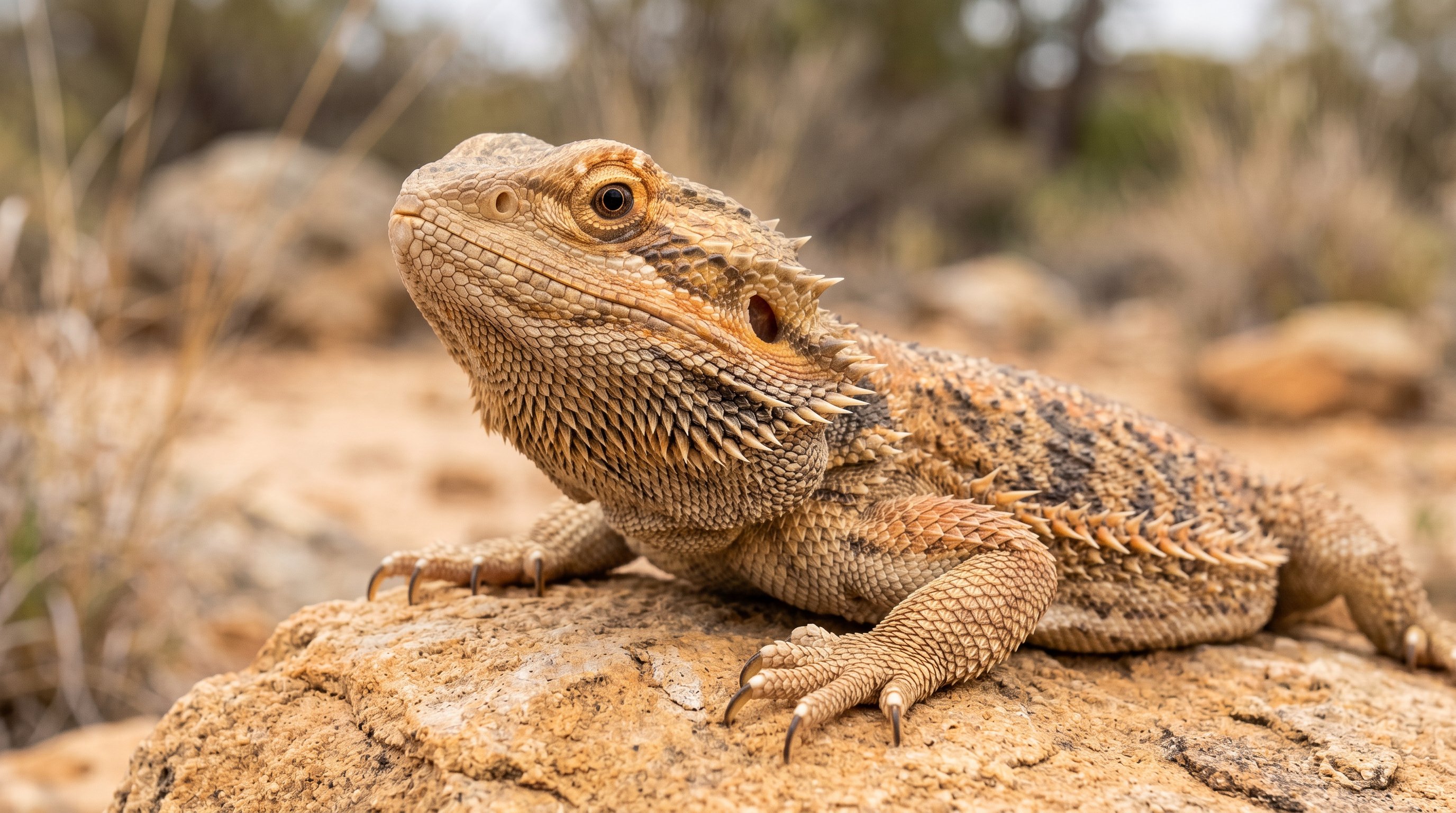
Bearded dragons earn their beginner-friendly reputation only when you treat UVB, basking heat, and diet balance as non-negotiable parts of the setup.
Evidence level
Species-specific veterinary and welfare sources
The core husbandry numbers on this page come from species-level veterinary or welfare guidance rather than broad hobby generalizations.
Activity
Diurnal
Activity pattern tells you when the animal is visible, when feeding happens, and whether its routine fits your schedule.
Lifespan
8–12 years
Lifespan changes the commitment more than novelty does; some of these animals stay with you for years or even decades.
Category context
A practical starting group with familiar species, strong husbandry demand, and lots of real-world questions about setup, feeding, and lifespan.
Species with larger space needs, heavier lighting demands, and more obvious long-term commitment.
Overview
Bearded dragons earn their beginner-friendly reputation only when you treat UVB, basking heat, and diet balance as non-negotiable parts of the setup.
The focus here is the care load that matters first in real life: enclosure design, temperature and humidity control, feeding rhythm, and the husbandry mistakes that cause trouble fastest.
Care snapshot
Enclosure baseline
RSPCA recommends at least a 120 × 60 × 60 cm vivarium for one adult bearded dragon, with secure ventilation and room to roam.
Heat + humidity
The hot bright end should reach about 38–42°C, the cool shaded end about 22–26°C, and humidity should usually stay around 30–40%.
UVB target
RSPCA calls for a high-output 10–12% UVB tube and a UV gradient roughly in the UVI 3.0–5.0 range in the basking zone.
Diet reality
Young dragons need more insect matter, but adults shift heavily toward greens; RSPCA’s baseline moves from roughly 65% livefood when young toward much more plant matter with age.
This page leans on species-specific welfare or veterinary owner guidance, so the setup numbers here are stronger than a broad generic exotic-pet summary.
Why it’s weird
They feel unusual compared with standard pets because they are expressive diurnal lizards that visibly bask, forage, and respond to routine rather than simply hiding all day.
Care reality
Most welfare failures come from lighting and nutrition, not from temperament. A friendly dragon can still develop preventable skeletal or metabolic problems in a weak enclosure.
Setup baseline
A dragon needs a bright, hot basking platform under guarded heat and usable UVB before décor matters.
Set up a plan for gut-loaded insects, safe greens, calcium support, and daily removal of uneaten live feeders.
RSPCA is clear that males are territorial and even females may fight or stress each other in captivity, so treat this as a one-dragon setup.
Daily rhythm
Bearded dragons are daytime baskers, so much of the useful observation happens when you watch whether the animal actually moves between bright heat, shade, food, and resting spots.
This is one of those reptiles where grocery greens, live-feeder management, and supplement routine become ordinary weekly maintenance rather than occasional extras.
Bulb replacement, UVB distance, and temperature checks stay on the schedule even when the dragon looks outwardly healthy.
Myth vs reality
Myth
A bearded dragon’s temperament is the hard part.
Reality
Temperament is rarely the main failure point; lighting quality, basking heat, and long-term nutrition usually matter much more.
Myth
If the dragon eats insects eagerly, the diet is probably fine.
Reality
Adults still need a strong greens-based routine, and insect enthusiasm does not override nutrition balance.
Myth
Two calm-looking dragons can share if they seem to tolerate each other.
Reality
Subtle stress, competition, and injuries can build long before obvious fighting makes the problem visible.
Fit check
Best for people who want a more visible daytime reptile and are willing to fund a large vivarium, replacement bulbs, live feeders, and a greens-heavy adult routine.
Great fit if…
Probably not if…
Watchouts
Weak UVB, undersized tanks, cohabiting dragons, and a junk-food insect diet are the big avoidable mistakes.
Common mistakes
Sources & notes
This page leans on species-specific welfare or veterinary owner guidance, so the setup numbers here are stronger than a broad generic exotic-pet summary.
Used for enclosure size, basking and cool-end targets, humidity, UVB, diet balance, and solitary housing.
Used as a veterinary-style cross-check for dry-environment lizard lighting and environment priorities.
Before you act on this guide
This page is for research, not veterinary diagnosis or legal clearance. Local ownership rules, rescue policies, and exotic-vet access vary by place.
Cookie settings
Required for theme, navigation state, and remembering this choice.
Some changes may need a refresh.