Evidence level
Species-specific veterinary and welfare sources
The core husbandry numbers on this page come from species-level veterinary or welfare guidance rather than broad hobby generalizations.
Tier 1 · Most Researched
Source-backed species page
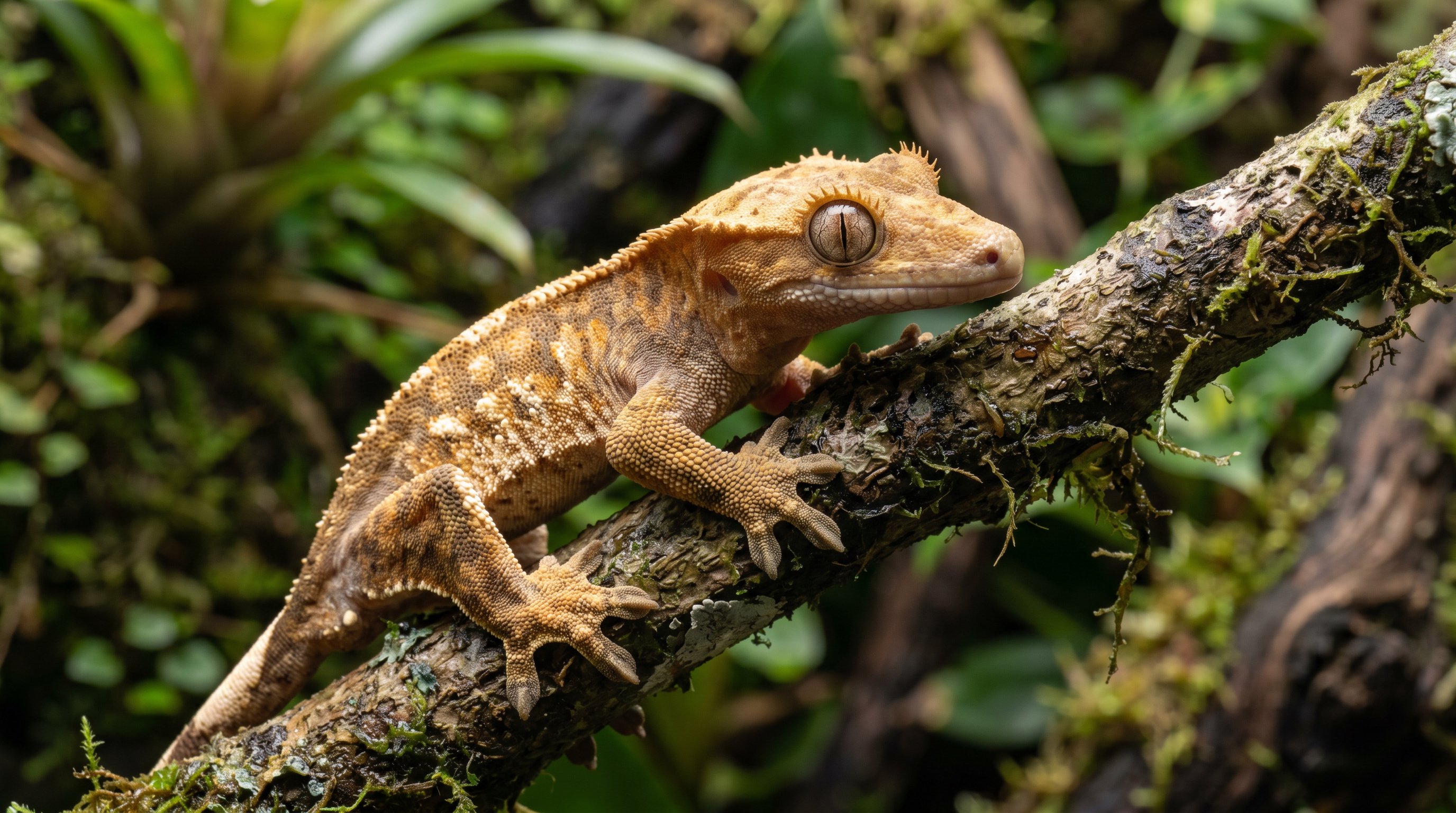
Crested geckos look simple because they stay small, but they are really a humidity-management and vertical-enclosure species.
Evidence level
Species-specific veterinary and welfare sources
The core husbandry numbers on this page come from species-level veterinary or welfare guidance rather than broad hobby generalizations.
Activity
Nocturnal
Activity pattern tells you when the animal is visible, when feeding happens, and whether its routine fits your schedule.
Lifespan
12–18 years
Lifespan changes the commitment more than novelty does; some of these animals stay with you for years or even decades.
Category context
A practical starting group with familiar species, strong husbandry demand, and lots of real-world questions about setup, feeding, and lifespan.
Compact reptiles that look approachable but differ sharply in humidity, diet, and lighting needs.
Overview
Crested geckos look simple because they stay small, but they are really a humidity-management and vertical-enclosure species.
The focus here is the care load that matters first in real life: enclosure design, temperature and humidity control, feeding rhythm, and the husbandry mistakes that cause trouble fastest.
Care snapshot
Enclosure baseline
RSPCA says an adult crested gecko needs a tall enclosure at least about 45 cm wide, 60 cm tall, and 45 cm deep.
Heat + humidity
Keep the basking area around 26–28°C, the coolest part around 20–24°C, and allow nighttime drops to about 18–20°C.
Humidity control
General humidity should sit around 40–50%, with short humidity boosts up to about 80% from spraying and enough ventilation to dry back out.
Diet mix
RSPCA recommends varied mashed fruit, live invertebrates, and appropriate supplementation or quality crested-gecko diet rather than relying on one food forever.
This page leans on species-specific welfare or veterinary owner guidance, so the setup numbers here are stronger than a broad generic exotic-pet summary.
Why it’s weird
They feel unusual because they are arboreal, soft-featured geckos that live in height, lick fruit diets, and use the enclosure very differently from ground-dwelling lizards.
Care reality
A good crestie setup is not just “spray sometimes.” It needs a tall enclosure, dry-out periods between humidity boosts, climbing cover, and a real feeding rotation.
Setup baseline
Put climbing branches, leaves, and shaded height zones ahead of floor décor because this is an arboreal gecko first.
Mist for a humidity rise, then let the enclosure breathe and partially dry instead of keeping everything wet all the time.
Rotate fruit mixes, live feeders, and complete gecko diets instead of letting one sweet favorite become the whole menu.
Daily rhythm
Crested geckos are often far more active in the evening and overnight than they are during daytime viewing hours.
Ownership usually involves brief misting, watching the enclosure dry back out, and keeping ventilation good enough that constant wetness never becomes the default.
Fruit diets, feeder insects, and water droplets all need simple but regular cleanup so the enclosure stays usable instead of sticky and stagnant.
Myth vs reality
Myth
A crested gecko is easy because it mostly eats fruit mix.
Reality
Diet can be convenient, but enclosure height, humidity cycling, and overheating prevention still decide whether the setup works.
Myth
If the cage looks lush and wet, the humidity problem is solved.
Reality
Good crestie care needs ventilation and dry-back periods, not a permanently soggy terrarium.
Myth
Because they stay small, a short tank is fine.
Reality
They use height, cover, and perches constantly, so vertical structure is part of baseline welfare rather than a bonus.
Fit check
Best for people who want a smaller arboreal gecko, accept evening activity instead of daytime interaction, and can keep humidity high without making the enclosure swampy.
Great fit if…
Probably not if…
Watchouts
Constantly wet substrate, fruit-only feeding, poor vertical cover, and overheating are the common beginner failures.
Common mistakes
Sources & notes
This page leans on species-specific welfare or veterinary owner guidance, so the setup numbers here are stronger than a broad generic exotic-pet summary.
Used for vertical enclosure size, temperatures, humidity cycling, UVB, water, and diet variety.
Before you act on this guide
This page is for research, not veterinary diagnosis or legal clearance. Local ownership rules, rescue policies, and exotic-vet access vary by place.
Cookie settings
Required for theme, navigation state, and remembering this choice.
Some changes may need a refresh.