Evidence level
Species-specific veterinary and welfare sources
The core husbandry numbers on this page come from species-level veterinary or welfare guidance rather than broad hobby generalizations.
Tier 1 · Most Researched
Source-backed species page
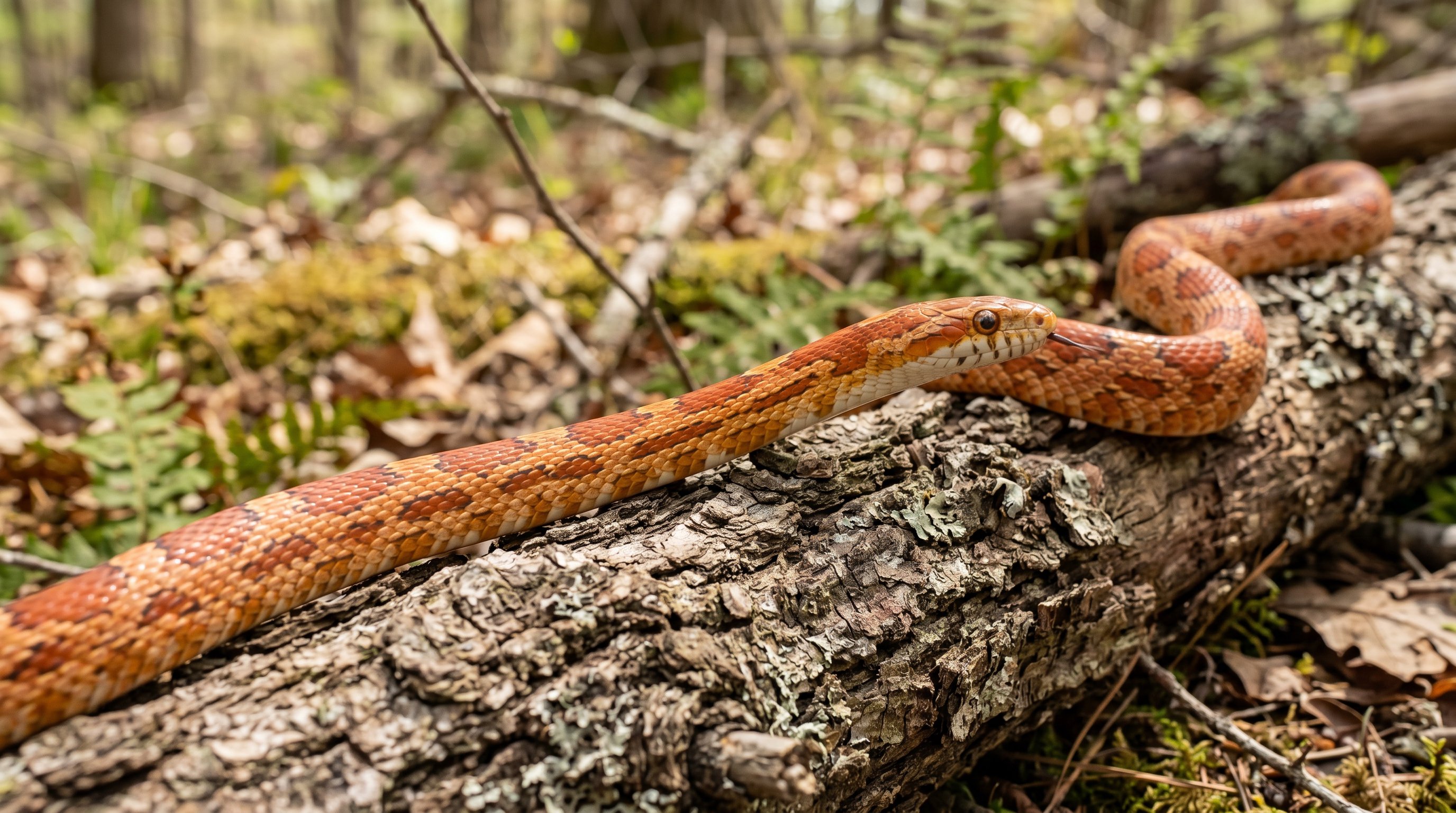
A corn snake is genuinely approachable for first-time snake keepers, but it still needs full-length housing, solid escape prevention, and measured heat instead of guesswork.
Evidence level
Species-specific veterinary and welfare sources
The core husbandry numbers on this page come from species-level veterinary or welfare guidance rather than broad hobby generalizations.
Activity
Crepuscular
Activity pattern tells you when the animal is visible, when feeding happens, and whether its routine fits your schedule.
Lifespan
15–20 years
Lifespan changes the commitment more than novelty does; some of these animals stay with you for years or even decades.
Category context
A practical starting group with familiar species, strong husbandry demand, and lots of real-world questions about setup, feeding, and lifespan.
Species people usually compare by enclosure security, feeding routine, humidity, and handling expectations.
Overview
A corn snake is genuinely approachable for first-time snake keepers, but it still needs full-length housing, solid escape prevention, and measured heat instead of guesswork.
The focus here is the care load that matters first in real life: enclosure design, temperature and humidity control, feeding rhythm, and the husbandry mistakes that cause trouble fastest.
Care snapshot
Enclosure baseline
RSPCA advises a vivarium long enough for the snake to fully stretch; their example for a 150 cm corn snake is about 150 × 50 × 50 cm minimum.
Heat + humidity
Aim for a basking zone around 28–30°C, a cool end around 20–24°C, and enclosure humidity around 40–50%.
That range is mainly about respiratory health and clean sheds, not “tropical” humidity.
Lighting + water
RSPCA also recommends a low-output UVB tube, shaded and bright zones, and a water dish big enough for the snake to bathe in.
Feeding rhythm
Hatchlings often start on a pinky every 5–6 days; adults commonly move to one adult mouse every 7–14 days, with prey only slightly wider than the widest body point.
This page leans on species-specific welfare or veterinary owner guidance, so the setup numbers here are stronger than a broad generic exotic-pet summary.
Why it’s weird
It stands out because it is one of the few odd-pet snakes that combines recognizability, manageable size, and a care pattern most people can realistically understand.
Care reality
The easy internet version skips the daily husbandry basics: a proper thermogradient, humidity in range for clean sheds, and whole-prey feeding on a long time horizon.
Setup baseline
Prioritize a vivarium the snake can fully stretch out in, then add tight hides at both ends so it can choose heat without giving up security.
Corn snakes stay forgiving only when the warm and cool ends are actually measured with digital thermometers and controlled by a thermostat.
Build your routine around frozen-thawed whole prey offered with tongs inside the enclosure, then leave the snake alone for 48 hours after feeding.
Daily rhythm
Many corn snakes become active around dusk, after lights-out, or in the early morning, so “it hides all day” is often just normal timing rather than a welfare red flag.
Water, temperatures, lid security, and the condition of the humid retreat are the routine checks that matter most between feedings.
Once the snake eats, the useful move is usually to leave it alone and watch for digestion, waste, and normal movement rather than to restart handling immediately.
Myth vs reality
Myth
A corn snake is so easy that the enclosure details barely matter.
Reality
They are forgiving compared with many reptiles, but poor heat, bad lid security, or low humidity during shedding still create preventable welfare problems.
Myth
If a corn snake hides a lot, something is probably wrong.
Reality
Hiding is normal snake behavior; what matters is whether the snake still uses both temperature zones, sheds cleanly, and feeds consistently over time.
Myth
You can judge prey size by whatever the pet store sold with the snake.
Reality
Prey should be matched to the individual animal’s widest body point and routine, not to a generic label on feeder packaging.
Fit check
Best for people who want a calmer display snake, can handle frozen-thawed rodents, and are prepared for a pet that may stay with them for well over a decade.
Great fit if…
Probably not if…
Watchouts
The usual beginner problems are loose lids, prey that is too large, poor humidity during shedding, and handling too soon after a meal.
Common mistakes
Sources & notes
This page leans on species-specific welfare or veterinary owner guidance, so the setup numbers here are stronger than a broad generic exotic-pet summary.
Used for enclosure sizing, thermal gradient, humidity, UVB, handling delay, bathing water, and feeding intervals.
Used as a specialist cross-check for enclosure structure, heating, humidity, and feeding practice in captive corn snakes.
Before you act on this guide
This page is for research, not veterinary diagnosis or legal clearance. Local ownership rules, rescue policies, and exotic-vet access vary by place.
Cookie settings
Required for theme, navigation state, and remembering this choice.
Some changes may need a refresh.