Evidence level
Species-specific veterinary and welfare sources
The core husbandry numbers on this page come from species-level veterinary or welfare guidance rather than broad hobby generalizations.
Tier 2 · Worth Comparing
Source-backed species page
Blue-tongued skinks feel sturdy and forgiving, but they are still large, UVB-dependent omnivores that need far more usable floor space than most people expect.
Evidence level
Species-specific veterinary and welfare sources
The core husbandry numbers on this page come from species-level veterinary or welfare guidance rather than broad hobby generalizations.
Activity
Diurnal
Activity pattern tells you when the animal is visible, when feeding happens, and whether its routine fits your schedule.
Lifespan
15–25 years
Lifespan changes the commitment more than novelty does; some of these animals stay with you for years or even decades.
Category context
A practical starting group with familiar species, strong husbandry demand, and lots of real-world questions about setup, feeding, and lifespan.
Species with larger space needs, heavier lighting demands, and more obvious long-term commitment.
Overview
Blue-tongued skinks feel sturdy and forgiving, but they are still large, UVB-dependent omnivores that need far more usable floor space than most people expect.
The focus here is the care load that matters first in real life: enclosure design, temperature and humidity control, feeding rhythm, and the husbandry mistakes that cause trouble fastest.
Care snapshot
Enclosure baseline
RSPCA advises a minimum enclosure around 120 × 75 × 75 cm for a single blue-tongued skink.
Heat + UVB
RSPCA targets a basking zone around 30–32°C, up to 35°C for younger skinks, a cool end around 22–25°C, and UVB exposure in roughly the UVI 3.0–5.0 range at the basking area.
Humidity reality
Humidity is locality-dependent, so the right answer starts with knowing which blue-tongue species or locality you actually have.
Diet split
Adults should eat a mixed omnivore diet; RSPCA’s guide places fruit under about 10% and emphasizes both animal matter and vegetables.
This page leans on species-specific welfare or veterinary owner guidance, so the setup numbers here are stronger than a broad generic exotic-pet summary.
Why it’s weird
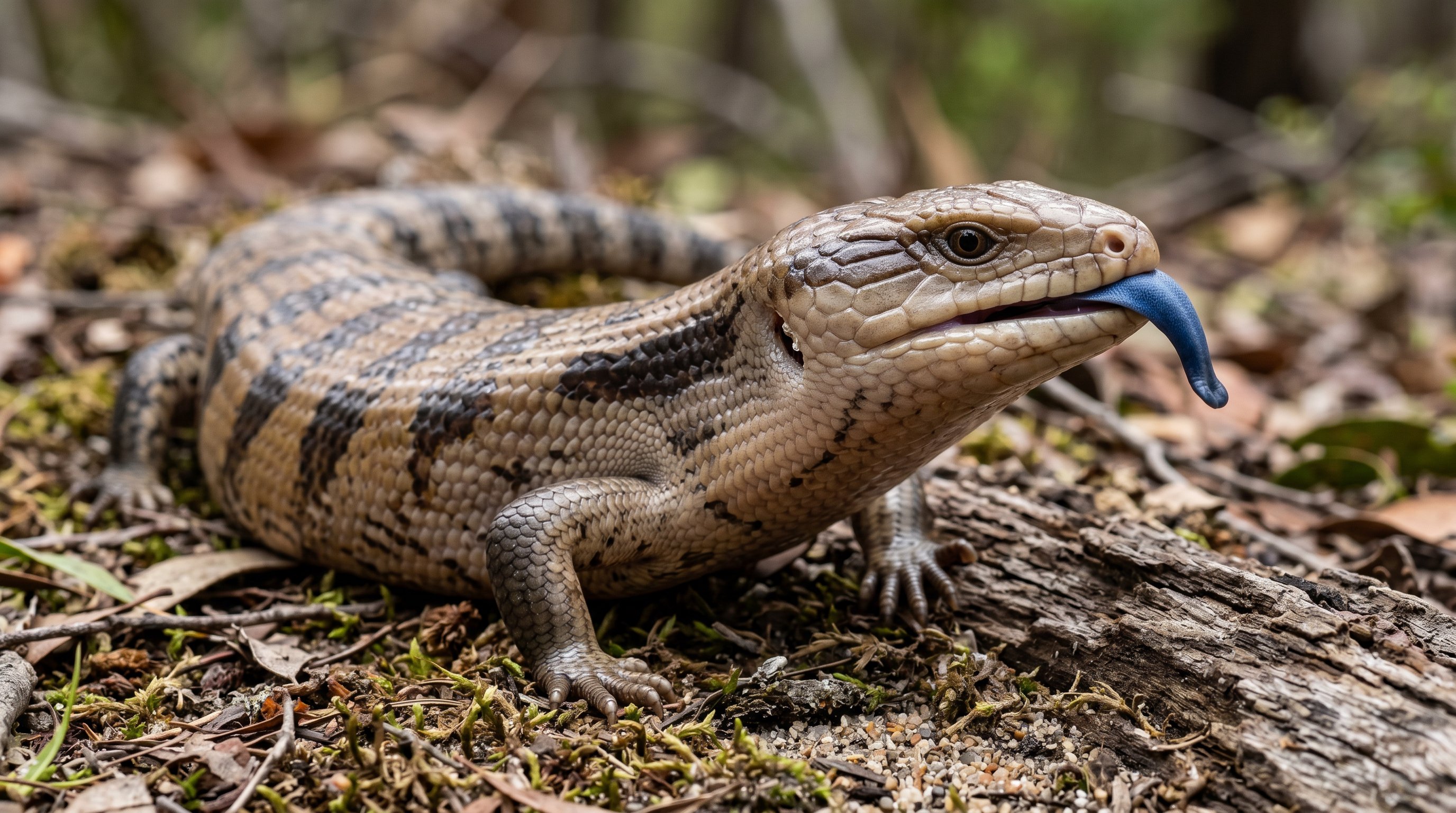
They stand out because few lizards combine such obvious personality, a bizarre blue warning tongue, and a daytime presence that feels closer to a small scaly mammal than to a hidden gecko.
Care reality
The hard part is not tameness. It is building a large enclosure with real basking heat, the right humidity for the exact locality, and a diet that is not fruit-heavy junk.
Setup baseline
Indonesian and Australian forms are not humidity clones, so identify the species or locality before copying a generic skink setup.
This is a floor-space reptile with a strong need for hides, burrowing substrate, and a broad basking platform.
Build the diet around appropriate animal protein, insects, and safe vegetables, then use fruit sparingly instead of as the default treat.
Fit check
Best for people who want a visible, food-motivated lizard and can support a large enclosure, regular greens prep, and species-specific humidity research.
Watchouts
The biggest blind spots are undersized housing, guessing at humidity for the wrong locality, and feeding too much fruit or mammal protein.
Common mistakes
Sources & notes
This page leans on species-specific welfare or veterinary owner guidance, so the setup numbers here are stronger than a broad generic exotic-pet summary.
Used for enclosure size, basking and cool-end targets, UVB range, humidity caution by locality, and omnivore diet ratios.
Before you act on this guide
This page is for research, not veterinary diagnosis or legal clearance. Local ownership rules, rescue policies, and exotic-vet access vary by place.
Cookie settings
Required for theme, navigation state, and remembering this choice.
Some changes may need a refresh.